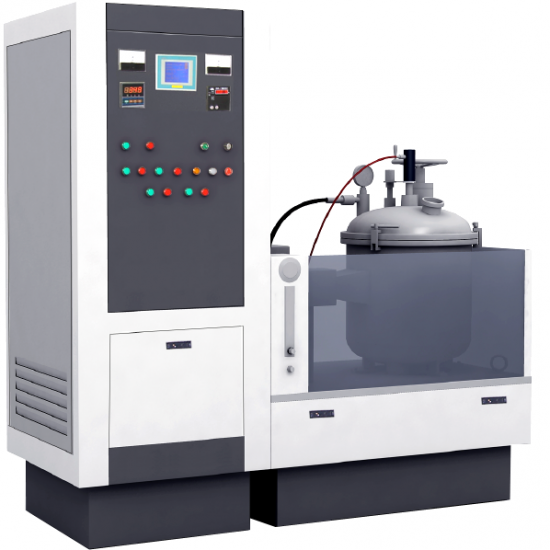
Xiamen Tmax Battery Equipments Limited was set up as a manufacturer in 1995, dealing with Laboratory equipments, technology, etc. We have total manufacturing facilities of around 2, 000 square meters and more than 100 staff. Owning a group of experie-nced engineers and staffs, we can bring you not only reliable products and technology, but also excellent services and real value you will expect and enjoy.
CVD Microwave Tube Furnace: Advanced Equipment for HighPrecision Chemical Vapor Deposition
A CVD microwave tube furnace is an advanced processing system designed to support highpurity Chemical Vapor Deposition (CVD) using microwaveassisted heating. This specialized furnace integrates microwave energy with a controlled tubular reaction chamber to achieve uniform heating, rapid temperature rise, and highly stable deposition conditions. It is especially valued in industries where precise film growth, nanomaterial synthesis, and highperformance coatings are essential. By combining the advantages of microwave dielectric heating and traditional CVD technology, the CVD microwave tube furnace provides superior temperature uniformity, enhanced reaction kinetics, and improved material quality.
Overview
The CVD microwave tube furnace is a cylindrical thermal processing device that uses microwaves as the main heat source to support vaporphase chemical reactions on a target substrate. The system consists of a microwave generator, a quartz or alumina reaction tube, a gas distribution system, temperature control units, and highvacuum or controlledatmosphere modules.
During operation, precursor gases enter the tube furnace and undergo decomposition or chemical reaction on the heated substrate surface, forming thin films or functional materials. Because microwaves directly interact with the material or susceptor, the heating efficiency is significantly higher than in traditional resistanceheated CVD furnaces.
This equipment is widely used in laboratories, research institutes, semiconductor production lines, and advanced material manufacturing environments.
Key Features
1. MicrowaveAssisted Dielectric Heating
Microwaves penetrate the reaction zone, generating volumetric heating. This results in fast temperature rise, high deposition efficiency, and improved uniformity across the substrate.
2. HighQuality Tube Design
The reaction chamber typically uses quartz, alumina, or silicon carbide tubes, which withstand high temperatures, resist corrosion, and maintain chemical purity required for CVD processes.
3. Precise Atmosphere and Gas Flow Control
Massflow controllers, vacuum pumps, and automated valves ensure accurate gas delivery. This is essential for achieving consistent film thickness and precise stoichiometry.
4. Integrated Microwave Shielding and Safety Systems
Special shielding prevents microwave leakage, and safety interlocks guarantee reliable operation in laboratory and industrial settings.
5. Programmable Temperature and Process Control
Advanced PLC systems allow users to set heating rates, microwave power, pressure, and gas flow with high precision, ensuring stable and repeatable deposition conditions.
CVD Process
The working principle of a CVD microwave tube furnace involves enhancing chemical vapor deposition reactions using microwave energy. The process typically follows these steps:
1. Preparation of Substrate and Precursors
Substrates (such as silicon wafers, ceramics, or metal foils) are cleaned and placed inside the reaction tube.
2. Evacuation and Atmosphere Conditioning
The furnace is purged with inert gas or pumped down to a controlled vacuum level to remove impurities.
3. Microwave Heating
Microwave energy is applied, causing the substrate or susceptor to heat rapidly and uniformly. This creates an optimal thermal environment for precursor decomposition.
4. Gas Introduction and Reaction
Precursors enter the chamber, undergoing chemical reactions at the heated surface to form thin films, nanotubes, or other specialized materials.
5. Cooling and Product Collection
After deposition, the system cools under controlled atmosphere to preserve film integrity and prevent oxidation.
Microwaveenhanced thermal energy accelerates reaction kinetics, often reducing deposition time and enabling lowertemperature CVD compared to conventional heating.
Microwave Sintering Furnace
Applications
1. Semiconductor ThinFilm Fabrication
Used to deposit siliconbased films, dielectric layers, and conductive coatings with excellent uniformity and crystalline quality.
2. Nanomaterial Synthesis
The CVD microwave tube furnace is ideal for preparing carbon nanotubes, graphene, nanowires, and quantum dots, thanks to its precise thermal and atmospheric control.
3. Ceramic and Refractory Coatings
Hightemperature ceramic films such as SiC, AlN, and TiN can be grown for protective or functional applications.
4. Photovoltaic and Energy Storage Materials
Enables the deposition of electrode materials, catalyst layers, and advanced battery coatings with high purity.
5. Surface Functionalization
Used in R&D laboratories for tailoring surface properties such as hardness, hydrophobicity, or catalytic activity.
Advantages
1. Faster Heating and Reaction Rates
Microwave volumetric heating significantly shortens ramping and deposition times, increasing productivity for both R&D and pilotscale manufacturing.
2. Enhanced Temperature Uniformity
Because microwaves heat the entire reaction zone evenly, film thickness uniformity and material structural consistency are greatly improved.
3. Lower Processing Temperatures
Many CVD reactions can proceed efficiently at lower temperatures when assisted by microwaves, reducing thermal stress on substrates.
4. Energy Efficiency
Microwave heating directly targets the material rather than the furnace walls, reducing energy losses and lowering operational costs.
5. Improved Material Quality
Crystal growth, film adhesion, and deposition purity benefit from the stable and contaminationfree environment of the microwave tube furnace.
Conclusion
The CVD microwave tube furnace represents a technologically advanced platform for chemical vapor deposition in modern materials science and semiconductor manufacturing. By integrating microwave dielectric heating with precise atmosphere control and robust thermal engineering, this furnace delivers unmatched efficiency, rapid heating performance, and highquality deposition results. Its ability to support researchgrade precision as well as scalable production makes it an essential tool for laboratories and industries pursuing nextgeneration materials and coatings.