Xiamen Tmax Battery Equipments Limited was set up as a manufacturer in 1995, dealing with Laboratory equipments, technology, etc. We have total manufacturing facilities of around 2, 000 square meters and more than 100 staff. Owning a group of experie-nced engineers and staffs, we can bring you not only reliable products and technology, but also excellent services and real value you will expect and enjoy
Microwave Oven: A Modern Thermal Processing Device for Efficient Heating Applications
A Microwave Oven is a widely utilized thermal processing device designed to heat, cook, or thaw various materials using high-frequency electromagnetic waves. As a modern piece of mechanical and electrical equipment, it has evolved significantly since its invention, becoming an indispensable appliance in residential, commercial, and industrial environments. Its unique heating mechanism, based on dielectric heating, enables rapid energy transfer, high efficiency, and uniform thermal performance, distinguishing it from conventional heating methods.
Working Principle
The fundamental working principle of a Microwave Oven is the generation and distribution of microwave radiation, typically at a frequency of 2.45 GHz. This frequency is optimal for exciting water molecules and certain polar substances within the target material. The key component responsible for generating microwaves is the magnetron, an electronic tube that converts electrical energy into high-frequency electromagnetic waves.
When microwaves enter the heating chamber, they penetrate the material and cause polar molecules to oscillate rapidly. This oscillation generates thermal energy through friction, resulting in volumetric heating. Unlike conventional conduction- or convection-based systems, microwave heating occurs internally and simultaneously throughout the material, significantly reducing processing time and improving energy efficiency.
Structural Composition
A modern Microwave Oven consists of several integrated mechanical and electrical subsystems:
Magnetron Assembly
The magnetron is the core radiation source, comprising a cathode, anode, magnetic field system, and resonant cavities. It produces microwaves when high-voltage current passes through, initiating electron motion within the resonant structure.
Waveguide and Stirrer System
The waveguide directs the microwaves from the magnetron into the heating chamber. Many industrial and commercial models incorporate a mechanical or motor-driven stirrer to distribute energy more uniformly.
Heating Chamber
Constructed from metal to prevent microwave leakage, the chamber includes a turntable or conveyor mechanism that rotates or transports the load, ensuring uniform exposure to microwave energy.
Control System
Equipped with sensors, microcontrollers, and power management circuits, the control system regulates heating parameters such as time, temperature, and power level. Advanced models may integrate smart feedback systems for precise thermal control.
Safety and Shielding Components
Radiation shielding, interlock switches, and thermal protectors ensure operational safety. Door seals and metallic mesh windows prevent microwave leakage while allowing visual monitoring.
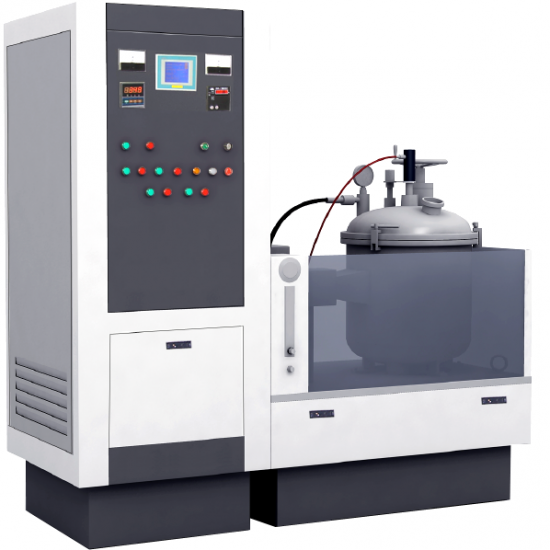
Microwave Sintering Furnace
Performance Advantages
Compared with traditional heating equipment, the Microwave Oven offers several key advantages:
High Energy Efficiency
Microwaves directly interact with the material being heated, resulting in reduced energy loss and faster heating cycles.
Rapid Processing
Volumetric heating reduces warm-up time dramatically, increasing process throughput in industrial applications.
Uniform Heating
Although uniformity depends on design, modern stirring systems and controlled power output significantly enhance temperature distribution.
Precise Control
Digital control systems enable accurate adjustment of heating parameters, which is essential for applications requiring strict thermal specifications.
Compact and Versatile
The equipment can be designed in various sizes for household kitchens, restaurant operations, laboratory applications, or industrial production lines.
Industrial and Commercial Applications
While household use remains the most common, the Microwave Oven has expanded into many specialized fields due to its unique heating properties:
Food Processing
Used for thawing, sterilizing, pasteurizing, drying, and cooking food products. Industrial microwave ovens improve production efficiency and reduce microbial load without degrading product quality.
Pharmaceutical Industry
Applied in drying active ingredients, sterilizing medical tools, and preparing chemical compounds that require fast, controlled heating.
Chemical and Materials Engineering
Many laboratories use microwaves to accelerate chemical reactions, synthesize nanomaterials, and improve material bonding processes.
Textile and Wood Treatment
Microwave systems assist in moisture removal, resin curing, and disinfection of wooden materials.
Safety Considerations
Despite being widely used and generally safe, Microwave Ovens must adhere to strict design and operational standards. These include electromagnetic shielding, temperature and pressure monitoring, and mechanical door interlocks. Regular inspection of the door seal, hinges, and control circuits ensures stability and prevents radiation leakage. Industrial microwave systems often include additional exhaust units, cooling systems, and emergency-stop mechanisms.
Future Development Trends
As technology advances, the Microwave Oven continues to evolve in several directions:
Integration with IoT and Smart Controls
Modern models support remote operation, real-time monitoring, and automated cooking programs.
Enhanced Energy Efficiency
Innovations in magnetrons, solid-state generators, and power control improve overall efficiency and reliability.
Hybrid Heating Technologies
Combining microwaves with infrared, convection, or steam heating results in improved cooking quality and broader industrial capability.